B2B SEO is about visibility.
In 2026, it is about something more fundamental: authority.
The search ecosystem is changing faster than in the past decade. In fact, Gartner predicts that traditional search engine volume will drop 25% by 2026 as AI chatbots and answer engines capture an increasing share of buyer research.
For B2B marketing leaders, this means the rules of SEO investment have changed. Optimizing for keyword rankings alone is no longer sufficient. An effective B2B SEO strategy in 2026 must build the kind of topical authority, technical foundation, and genuine subject-matter expertise that earns citations from AI systems, not just positions in traditional search results pages.
This post covers the five core components of a B2B SEO strategy that drives revenue in 2026, with specific guidance on adapting to AI search without abandoning the organic fundamentals that still produce compound returns over time. See how Pace Creative’s digital marketing services integrate SEO with full-funnel demand generation strategy.
Why Has B2B SEO Strategy Changed So Significantly Recently?
Three structural shifts are driving the change in B2B SEO in 2026 which should be taken into account by CMOs doing budget planning.
- AI Overviews are reducing click-through rates even for top-ranked content.
Research published in early 2026 shows that AI Overviews now appear in up to 47% of Google search results, and that click-through rates drop by 34.5% when an AI Overview is present. Zero-click searches have surged to 58% in the US, meaning more than half of all searches now end without a single link click.
- AI-generated content has flooded search results with low-quality, undifferentiated material.
Gartner notes that with GenAI driving down content production costs, search algorithms are placing even greater weight on content quality, authenticity, and demonstrated expertise. The content that ranks and gets cited in 2026 is content that AI cannot replicate because it reflects genuine experience and proprietary knowledge.
- Organic search remains the top traffic driver despite these shifts.
A 2025 Forrester survey found that organic search drives 90% of total B2B web traffic, 20% of which will be still AI-powered search. In 2025, Gartner found that SEO was the top recipient of owned and earned media budget, claiming approximately 9% of the total digital marketing mix. Organic is not declining, it is evolving.
“Gartner predicts traditional search engine volume will drop 25% by 2026 due to AI chatbot adoption. Yet organic search still drives 26% of B2B web traffic, more than paid search.”
Source: Gartner Newsroom (Feb 2024)
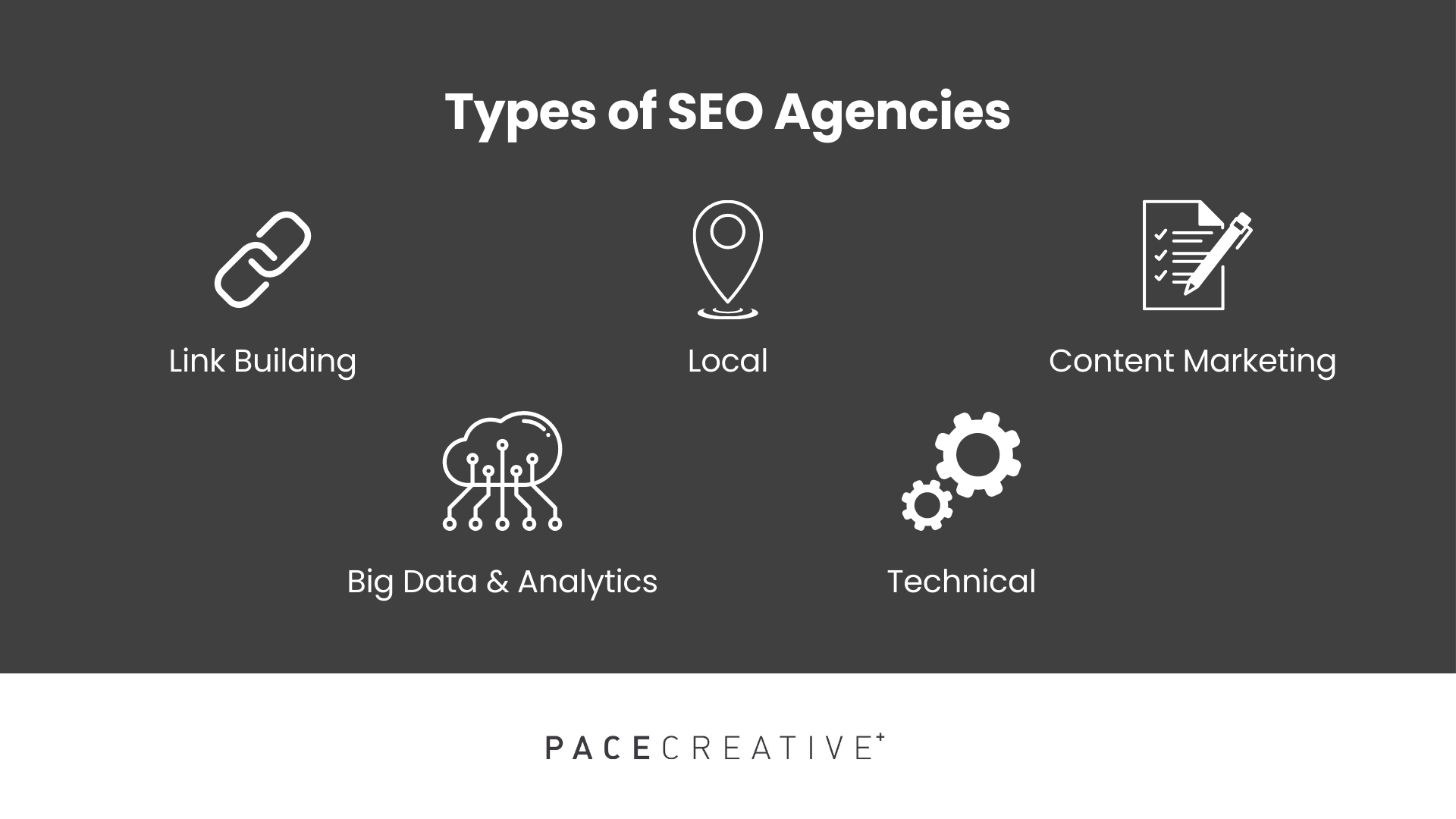
What Are the Five Core Components of a B2B SEO Strategy?
To be most successful and impactful, a B2B SEO Strategy uses all types of SEO in a unified and integrated marketing framework. It is not based on ideas, instead it relies on data and research.
1. Content Marketing and Topical Authority
Content marketing remains the foundation of B2B SEO because it is how you build topical authority with depth of coverage and expertise on a subject that signals to both Google and AI systems that your brand is the credible reference source. Forrester research notes that content which is “authentic, specific, and quotable” is more likely to be surfaced in AI-generated search responses. Generic content that summarizes what others have already written is being filtered out by both traditional algorithms and AI systems.
Effective B2B content SEO in 2026 focuses on:
- Original research and proprietary data: Content containing unique statistics, survey findings, or client outcome data that AI cannot source elsewhere. These assets become cited references rather than one result among thousands.
- Long-form, search-intent-matched posts: The average Google first-page result contains 1,447 words, with an according to Yoast. Long-form content that fully answers a buyer’s question should contain 900+ words and will earn both rankings and dwell time.
- Structured answer blocks: Direct 40-60 word answer blocks at the start of each H2 section significantly improve the likelihood of being cited in AI Overviews and LLM responses.
- Consistent publication at depth: Publishing on a narrow set of high-value topics repeatedly is more effective than covering many topics shallowly. Topical authority is built through cumulative coverage, not occasional posts.
See how B2B content marketing strategy and content marketing services build the editorial foundation for SEO authority.
2. Technical SEO
Technical SEO is the infrastructure that ensures your content can be found, crawled, indexed, and understood by both traditional search engines and AI systems. Without a clean technical foundation, the best content in your category will not reach the buyers searching for it.
Core technical SEO priorities in 2026 include:
- Page speed and Core Web Vitals: Site speed directly affects both Google rankings and bounce rates. Statistica found that the highest-converting sites load in under one second, with conversion rates dropping materially with each additional second of load time.
- Schema markup and structured data: FAQ schema, HowTo schema, and Article schema all improve the probability of appearing in rich results and AI-generated summaries. These structured data signals help AI systems parse and cite your content accurately.
- Mobile optimization: Google uses mobile-first indexing for all sites. A B2B website that performs poorly on mobile loses rankings regardless of content quality.
- Crawlability and index hygiene: Duplicate content, broken internal links, and poor site architecture dilute domain authority. Regular technical audits ensure your high-value content is getting the indexing signal it deserves.
See how website optimization strategy and website development services build the technical SEO foundation for B2B growth.
3. Analytics & Big Data
Google’s quality rater framework, E-E-A-T, has become more consequential with the rise of AI-generated content. Gartner’s guidance to B2B tech marketers explicitly advises brands to “focus on producing unique content that is useful to customers” and to “demonstrate search quality-rater elements such as expertise, experience, authoritativeness and trustworthiness.” These are the signals that distinguish your content from AI-generated alternatives.
E-E-A-T signals for B2B SEO include: named authors with verifiable credentials, client testimonials and case studies linked to identifiable outcomes, third-party citations and analyst mentions, consistent domain coverage in a defined subject area, and transparency about methodology and sourcing. Each of these signals communicates to both Google and AI systems that your content reflects genuine expertise rather than algorithmically assembled information.
Analytics is the process of collecting, measuring, and interpreting data to inform decision-making and improve performance that is generated by different analytic tools. That process needs to align marketing channels with business goals to track outcomes.
4. Generative Engine Optimization (GEO)
GEO is the practice of structuring content to be cited across AI platforms including ChatGPT, Perplexity, Google AI Mode, and Gemini, as well as appearing in traditional search results.
Research found that sites with 32,000 or more referring domains are 3.5 times more likely to be cited by AI systems. Strong domain authority, built through traditional link-building and earned media, remains the foundation for AI citation as well.
“AI Overviews appear in up to 47% of Google search results. Click-through rates drop 34.5% when AI Overviews are present. But LLM referred traffic converts at 3.76% vs 1.19% for standard organic, a 216% improvement. GEO is not replacing SEO. It is the next layer of it.
Source: Search Engine Journal
GEO optimization tactics that work in 2026:
- Include direct, specific answer blocks at the start of each section that an AI system can extract and cite without paraphrasing.
- Use clear H2 and H3 headings that match the exact questions buyers are asking, including natural language variants.
- Publish specific statistics with source citations. AI systems weight content with verifiable data sources more heavily.
- Build presence on platforms where LLMs source knowledge: LinkedIn, industry publications, YouTube, Reddit, and recognized analyst reports.
5. Link Building and Domain Authority
Link building remains a core component of B2B SEO because domain authority is the primary signal that both traditional algorithms and AI citation models use to evaluate source credibility. Ahrefs research consistently shows that the vast majority of pages receive no organic traffic at all, with low domain authority as the leading factor.
Effective B2B link building in 2026 focuses on earning links from authoritative sources, not acquiring them through low-quality directories. Guest contributions to industry publications, original research that others cite, partnerships with analysts and associations, and PR coverage all build domain authority in ways that compound over time. B2B brand credibility and link building are the same strategic investment viewed from different angles
How Do You Prioritize B2B SEO Investment for Maximum Revenue Impact?
With limited budget and competing priorities, B2B marketing leaders need to know where SEO investment produces the fastest and most durable return. The evidence from Forrester B2B 2026 research and Gartner’s 2025 CMO Spend data points to three priority areas.
- Prioritize quality over volume. The Content Marketing Institute B2B 2026 report found that the biggest driver of content performance improvement in 2026 is strategic refinement, not increased content volume. Fewer, more authoritative posts on high-intent B2B topics consistently outperform high-volume, low-depth content programs.
- Use SEO to offset paid media inflation. According to Gartner’s 2025 CMO Spend Survey, paid media accounts for 30.6% of marketing budgets but media price inflation means CMOs are getting less for every dollar spent. Organic content compounds in value over time with no ongoing media cost, making it the highest long-term ROI channel in the B2B marketing mix.
- Align SEO content with the full buyer journey, not just top-of-funnel. B2B SEO strategies that focus exclusively on awareness-stage content miss the 85% of the purchase decision that happens before buyers contact sales, according to Demand Gen Report. SEO content mapped to middle and bottom-of-funnel queries, such as competitive comparisons, implementation questions, and ROI validation, converts at significantly higher rates because it reaches buyers with active commercial intent.
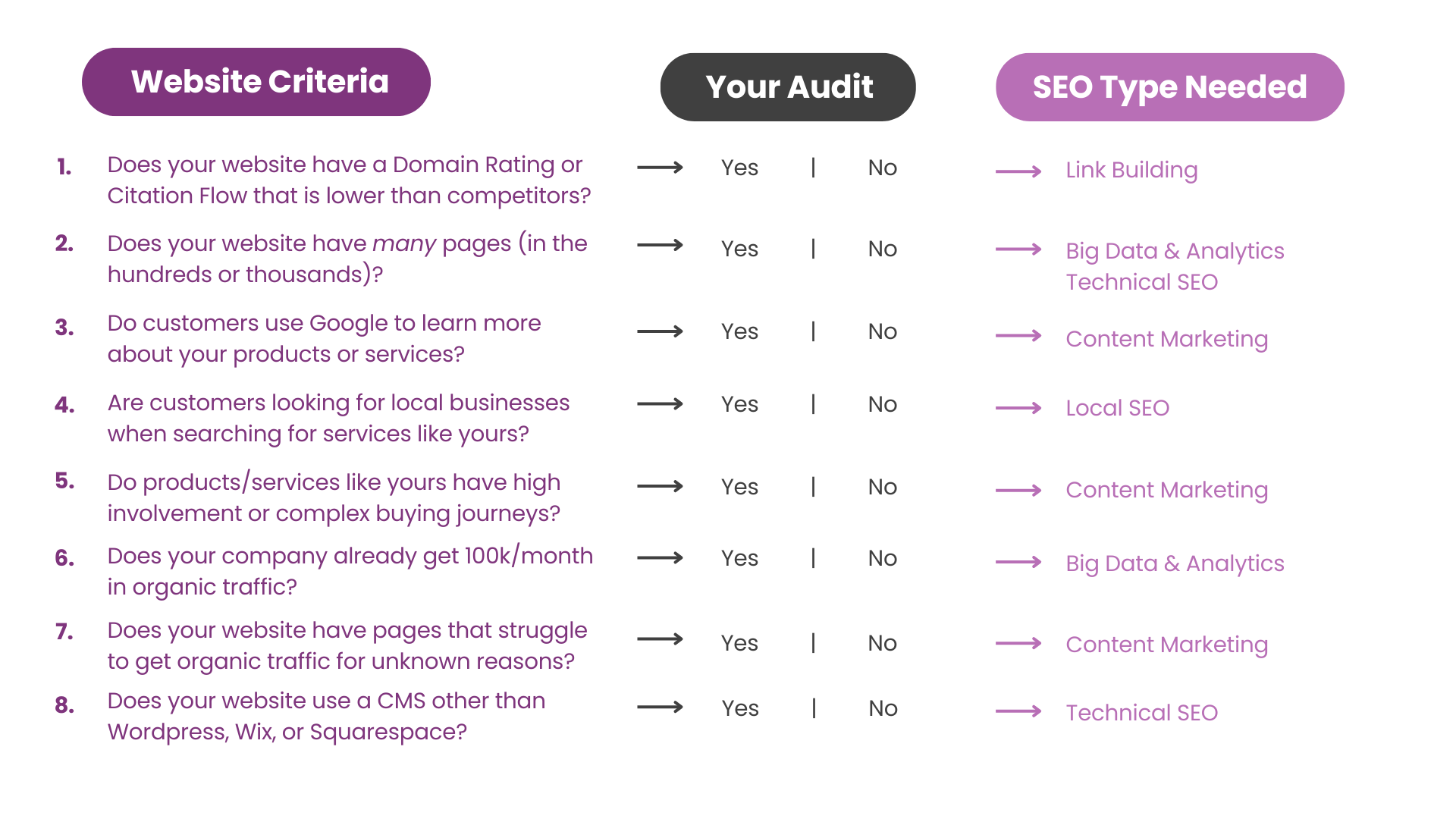
For every “Yes” in each prompt, tally up what type of SEO is needed to help grow your business in an SEO Agency. Pace Creative is able to help you achieve a winning SEO strategy for your business!
How Does B2B SEO Strategy Connect to Overall Revenue Growth?
SEO is not a standalone channel. Its highest value comes from integration with demand generation, content marketing, and sales enablement into a unified inbound marketing engine. When SEO content is created with buyer journey mapping, account-based targeting, and sales enablement in mind, organic search becomes a predictable pipeline driver rather than a brand awareness tool with uncertain commercial impact.
The Performance Fuel pillar of Pace Creative’s marketing maturity framework connects SEO to paid, organic, and content programs in a coordinated system designed to drive revenue month over month. That integration is where organic search stops being a cost center and becomes a compounding revenue asset.
Ready to Build a B2B SEO Strategy for Revenue Growth?
The B2B SEO landscape in 2026 rewards brands that invest in genuine expertise, technical excellence, and the kind of original content that AI systems cite rather than replace. The organizations that built strong organic foundations over the past three years are now the ones earning AI citations, high-intent traffic, and durable pipeline.
Pace Creative builds integrated B2B SEO strategies that connect content marketing, website optimization, and digital marketing services into a unified revenue growth engine. Start with a strategic marketing audit to assess where your current SEO investment is generating return and where you have the highest opportunity to grow.
Use the Marketing ROI Calculator to model the revenue impact of an optimized SEO investment, or contact the team to build a B2B SEO strategy for 2026.