Web design trends move fast, but most B2B companies do not update their websites fast enough to keep pace. The result is a growing gap between what buyers expect from a digital experience and what most B2B websites actually deliver.
According to the McKinsey Design Index, companies in the top quartile for design investment achieve 32 percentage points higher revenue growth and 56 percentage points higher total returns to shareholders than their industry peers over a five-year period. Design is not a cosmetic decision. It is a commercial one.
In 2026, the most impactful web design trends are about performance, conversion architecture, AI-driven personalization, and accessibility, which are the four dimensions that directly affect whether a B2B website generates qualified pipeline or simply exists online. Gartner predicts a 25% decline in traditional search volume by 2026 due to AI-assisted discovery. A website built on last decade’s design principles will lose visibility and pipeline to competitors built for how buyers find, evaluate, and decide in 2026.
This post covers the web design trends that matter for B2B companies in 2026 framed as a commercial investment framework. For the technical execution layer behind these trends, see how website optimization services and B2B SEO strategy combine to turn design investment into measurable results.
Why Do Web Design Trends Matter More for B2B in 2026 Than Ever Before?
Three structural shifts have made website design a board-level concern for B2B companies.
- The buyer journey is now predominantly digital and self-directed. Gartner research on the B2B buying journey confirms that B2B buyers spend only 17% of their total purchase process in direct contact with vendors. The company website is the primary touchpoint during the other 83%, according to McKinsey’s 2024 B2B Pulse Survey, which found that B2B decision-makers now use an average of ten channels during their purchase journey, with the company website ranking first.
- Technical performance is now a ranking prerequisite. Google’s Core Web Vitals framework has made site speed, interactivity, and visual stability into direct search ranking factors. According to the 2025 Web Almanac (HTTP Archive), only 48% of mobile websites currently pass all three Core Web Vitals thresholds. A website that fails these standards loses organic visibility before its design is ever evaluated by a buyer.
- AI-generated search is changing how buyers discover vendors before they ever visit a website. Forrester’s 2026 B2B Predictions note that B2B buying increasingly begins with AI-assisted research. Websites structured with clear content hierarchy, strong E-E-A-T signals, and well-organized information architecture are significantly more likely to be cited in AI-generated answers.
SEO and design decisions are inseparable.
“Top-quartile McKinsey Design Index scorers achieved 32 percentage points higher revenue growth and 56 percentage points higher total returns to shareholders than industry peers over a five-year period. Design is a measurable commercial differentiator, not an aesthetic preference.”
Source: McKinsey: The Business Value of Design
What Are the Most Important B2B Web Design Trends for 2026?
1. Performance-First Design and Core Web Vitals Compliance
In 2026, page speed and visual stability are design constraints, not afterthoughts. Every design decision, hero image weight, animation complexity, font loading strategy, and third-party script volume, has a direct consequence for Core Web Vitals scores and, therefore, for organic rankings and bounce rates. Google’s Core Web Vitals guidance defines LCP at or under 2.5 seconds, INP at or under 200ms, and CLS below 0.1 as the thresholds for a “good” page experience. Research shows that improving LCP from 3 seconds to 1 second reduces bounce rates by 32%.
For B2B websites built on WordPress, which is Pace Creative’s primary CMS platform, Yoast SEO provides the technical SEO foundation for every page, ensuring structured data, canonical tags, meta tag management, and readability scoring are applied consistently without requiring manual developer intervention. SEMrush’s site audit tool complements this by identifying performance issues such as broken links, slow-loading pages, uncompressed images, render-blocking scripts, and ranking them by impact.
Together, these tools create a continuous performance monitoring layer that prevents design debt from accumulating post-launch.
2. AI-Powered Personalization and Dynamic Content
Static websites that present the same content to every visitor regardless of industry, company size, or buyer stage are losing ground to sites that adapt in real time. Gartner predicts that by 2026, over 80% of digital products will embed some form of AI-driven personalization. For B2B websites, this means surfacing different case studies, CTAs, and content for a manufacturing procurement manager versus a technology CTO versus a healthcare operations director, using behavioral signals, referral source, or account-level data to tailor the experience without additional friction.
The commercial logic is straightforward: a buyer from the healthcare sector who lands on a B2B website and immediately sees relevant case studies, industry-specific service descriptions, and healthcare-focused testimonials has a significantly lower bounce rate and higher conversion probability than one who encounters generic enterprise copy.
For context on how Pace Creative approaches industry-specific content, see our expertise in healthcare and technology.
3. Conversion Architecture and Intent-Mapped CTAs
The most common design flaw on B2B websites is structural. Most sites present the same CTA (“Contact Us” or “Book a Demo”) to every visitor regardless of where they are in the buying process. A first-time visitor researching a category needs a different conversion path than a returning buyer evaluating vendors.
Conversion architecture means designing each page with a clear intent-matched primary action.
Top-of-funnel pages such as blog posts, industry guides, SEO landing pages, should convert to a content asset, tool, or newsletter.
Mid-funnel pages should convert to a case study, webinar, or consultation.
Bottom-funnel pages should convert directly to a demo, proposal, or assessment.
Gartner Digital Markets research identifies personalized, intent-matched content near conversion points as the most consistent driver of improved B2B conversion rates.
The Marketing ROI Calculator is an example of a mid-funnel conversion tool as it provides genuine value to the buyer while creating a natural commercial conversation.
“Gartner predicts a 25% decline in traditional search engine volume by 2026 as AI-assisted discovery reshapes how buyers find vendors. B2B websites built for keyword-driven search alone are structurally misaligned with how the next generation of buyers will arrive.”
Source: Gartner: Search Engine Volume Prediction 2024
4. Accessibility as a Design Standard, Not a Compliance Checkbox
Accessibility in web design has moved from a legal risk consideration to a business performance driver. The World Health Organization estimates that 1.3 billion people, approximately 16% of the global population, live with significant disability. Designing websites that are navigable with screen readers, keyboard-only controls, and high-contrast displays is not just the right practice; it directly increases the total addressable audience for every B2B website.
WCAG 2.2 compliance, released in 2023, added new success criteria around focus appearance, dragging movements, and target size minimums. For B2B websites rebuilt or refreshed in 2026, meeting WCAG 2.2 AA standards is the minimum baseline. On WordPress, Yoast’s readability and structural content guidance helps ensure that body content is accessible at the writing level (for example: clear headings, sentence structure, and reading level) while development-level accessibility (ARIA labels, focus states, color contrast ratios) is addressed during the build phase.
Example 1: Ostara

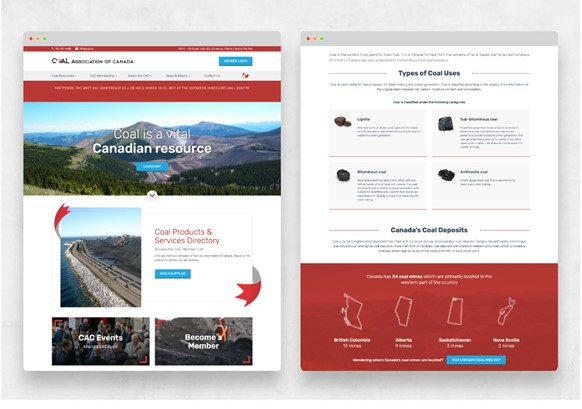
Example 2: Coal Association
When looking at your online presence, think of how your audience interacts with your page and how it responds affects the positive user experience (UX). Typically, users expect websites to load instantly. If it takes your web design more than 3 seconds to respond, your overall bounce rate increases by 32%. This would directly impact your SEO performance since Google gives higher ranks based on page speed.
5. Information-Dense Layouts Built for Long-Form B2B Content
Consumer web design trends in 2026 lean toward maximalism, bold color palettes, and layered animation. B2B web design trends move in a different direction: toward clarity, readability, and trust signals that support a complex, multi-stakeholder buying decision. Forrester research on B2B buyer preferences consistently shows that B2B buyers prioritize credibility indicators such as client logos, case studies, certifications, and data-backed claims, over visual novelty.
The trend toward information density means that B2B websites should be designed to support long-form content without compromising readability. Readable typography, minimum 16px body text, high contrast, generous line height, reduces cognitive load for buyers reading detailed product descriptions, technical specifications, or service overviews. Structured grid layouts with establshed visual hierarchy help buyers navigate complex service portfolios quickly.
See how B2B brand strategy and visual content strategy work together to reinforce brand credibility while maintaining commercial messaging.
6. Mobile-First Design That Supports B2B Buying Behavior
Google completed its transition to mobile-first indexing in July 2024. Every website is now evaluated by mobile Googlebot first, meaning that mobile performance determines desktop rankings. Yet many B2B websites are still effectively desktop designs with a responsive stylesheet applied as an afterthought.
True mobile-first design for B2B means rethinking navigation, content hierarchy, and CTAs specifically for how B2B buyers use mobile. McKinsey research finds that B2B decision-makers increasingly use mobile to research vendors, review case studies, and compare options between meetings.
A mobile experience that requires zooming, horizontal scrolling, or buried CTAs fails at the exact moment when a buyer’s intent is highest, when they are actively evaluating options.
How Do Web Design Trends Connect to B2B Lead Generation and Pipeline?
Each of the six trends above is measurable in commercial terms. Performance improvements reduce bounce rates and increase time on site. Conversion architecture improvements increase the percentage of visitors taking a desired action at each funnel stage. Personalization improvements increase content relevance and reduce drop-off for specific buyer segments.
The measurement infrastructure that connects design investment to pipeline requires proper analytics configuration from day one. This means Google Analytics goal tracking for every conversion event, UTM parameters for all inbound traffic, and keyword position monitoring in SEMrush to capture whether design improvements are driving organic visibility gains. Without this instrumentation, design improvements are real but invisible to leadership. With it, every UX decision becomes a data point in the commercial argument for continued investment. See how B2B marketing ROI tracking builds the measurement layer that makes design investment defensible.
The connection between design and demand generation is also direct. A well-optimized website creates the organic foundation that demand generation strategy builds on. Content marketing generates traffic that only converts if the website is designed to capture and direct intent. Sales enablement content reaches buyers only if the site architecture makes it findable. Each investment amplifies the others when the website works as a coordinated commercial system.
“McKinsey’s 2024 B2B Pulse Survey found that the company website is the top touchpoint across all stages of the B2B buying journey. Design decisions made today determine whether buyers stay, evaluate, and convert — or move on to a competitor whose site answers their questions faster.”
Source: McKinsey: Five Fundamental Truths — How B2B Winners Keep Growing
What Does Pace Creative’s Approach to B2B Web Design Look Like in Practice?
Pace Creative’s web design work is built on the principle that design decisions must be traceable to commercial outcomes.
Every engagement begins with buyer journey mapping and competitive benchmarking before a single wireframe is drawn because what B2B buyers need from a website in the healthcare sector is structurally different from what they need in technology or manufacturing.
For the Coal Association of Canada, a full website redesign produced 24,000 new visitors and reduced the bounce rate to 55.84% through taxonomy-based architecture, SEO-optimized content, and a resource hub that matched how member organizations actually research energy policy topics.
For Kindred, a brand and website overhaul reduced the bounce rate from 89% to 55% by aligning visual design with buyer intent and redesigning content hierarchy around specific decision stages.
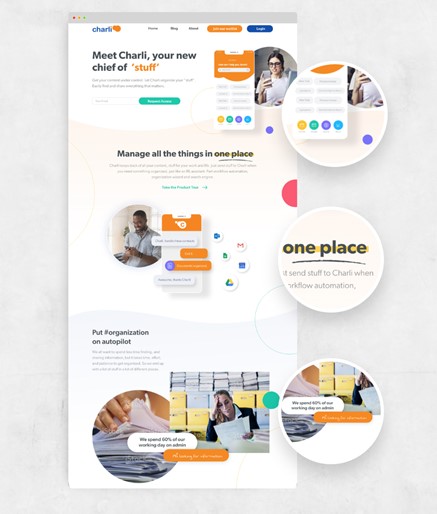
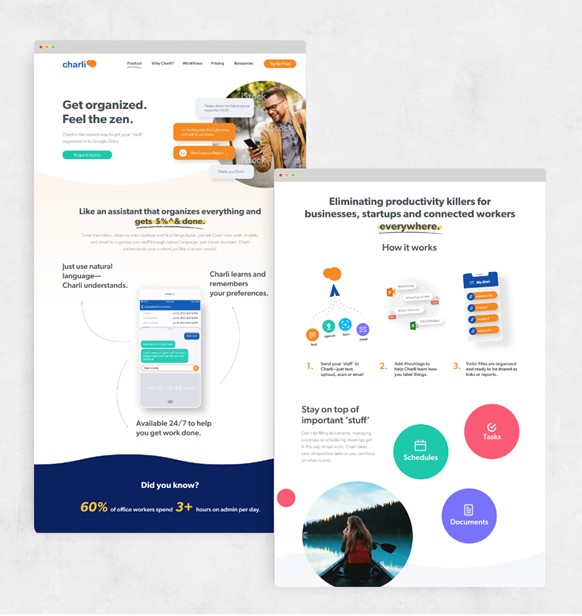
For Charli.Ai, content architecture backed by a cohesive brand style guide tell a story in a subtle way.
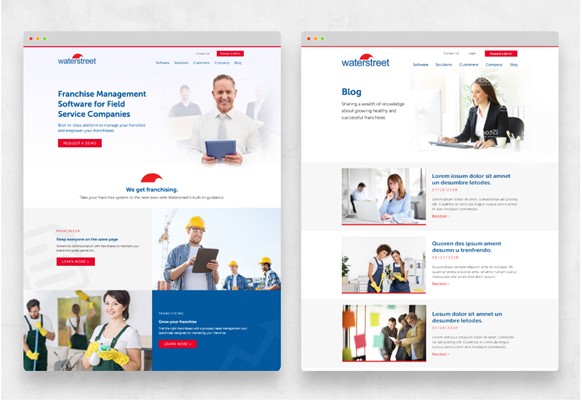
Waterstreet uses photography and images to help tell the brand story and highlight the most important valuable content.
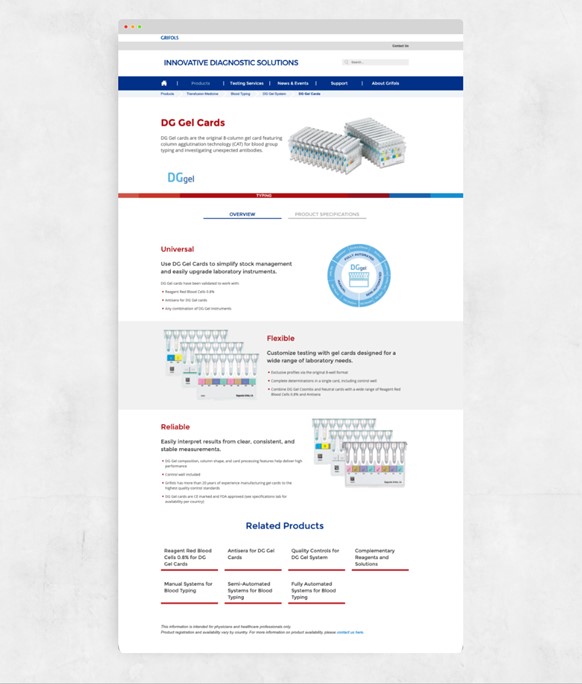
Grifols invested in to professional 3D illustration and professional photography with some colour elements to draw visitors to read the entire page.
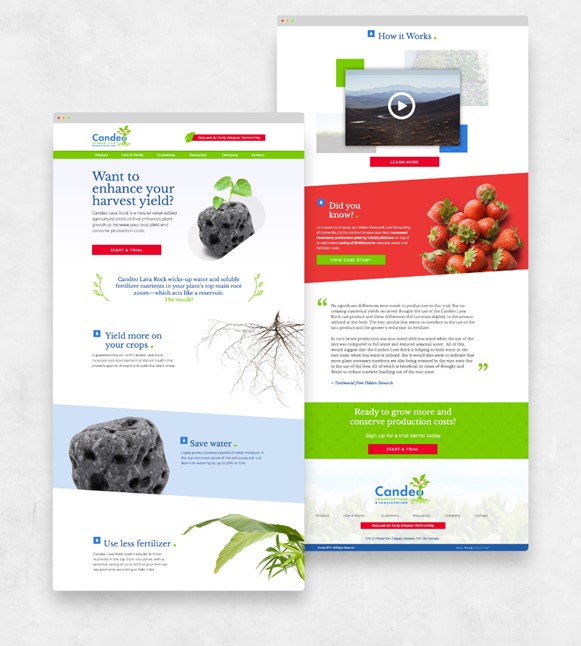
Candeo uses asymmetrical web designs with a lopsided feel to help the user focus its attention on the most important content and helps separate navigation or sidebar content from the more critical information
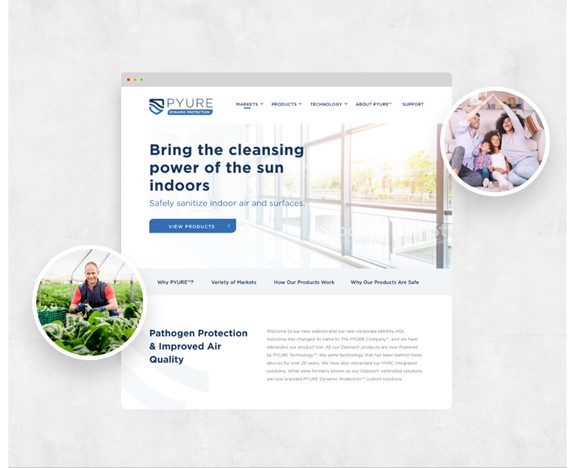
The PYURE Company used photography that is strategic for online use and can be repurposed for other marketing materials
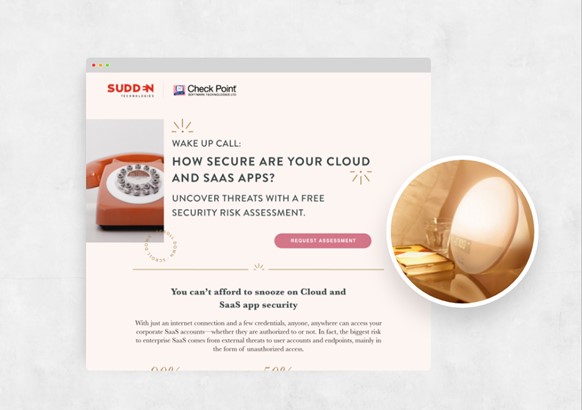
Sudden Technologies uses the concept across the campaign to tighten up the value driven messaging and create a continuous flow of the story for a cohesive storyline.
All results are documented in Pace Creative’s client work.
The common thread across all of our engagements: performance, clarity, and measurement came before visual trend adoption. Design that earns results in B2B starts with understanding what the buyer needs to see, in what order, and why that sequence converts. The visual expression follows, it does not lead.
Ready to Design a B2B Website That Converts Buyers in 2026?
Web design trends are only valuable to B2B companies when they translate into commercial outcomes: lower bounce rates, higher content engagement, more qualified leads, and shorter sales cycles. The trends outlined in this post are performance drivers, and each one is measurable
Pace Creative brings a decade of B2B web design experience to clients across healthcare, technology, manufacturing, and resources. Explore website development services and design services, review the B2B marketing maturity framework to understand where website design fits in your overall marketing architecture, and use the Marketing ROI Calculator to estimate the pipeline impact of improved site performance.
Download the B2B marketing eBook or contact the Pace Creative team to discuss your website design goals for 2026.